Short rains preparation topdressing is usually written up as a calendar problem: plant here, topdress there. It is really a soil problem wearing a calendar's clothes. Between the day a farmer breaks ground and the day urea goes down beside knee-high maize, the soil goes through a sequence of physical states, and each state has a number attached that governs whether the next stage works. This piece takes that sequence apart, stage by stage, and says which number matters at each one.
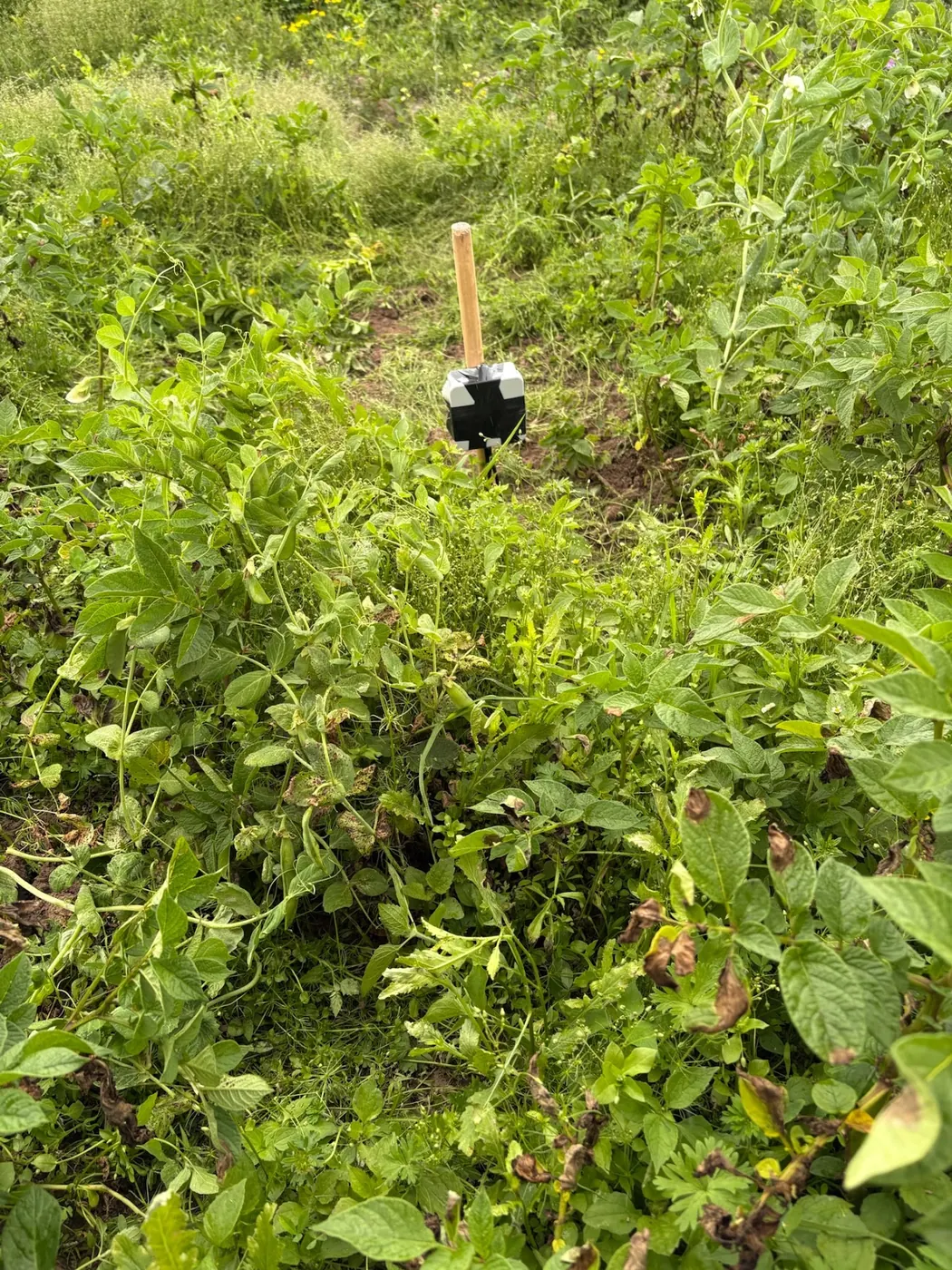
Land preparation starts before the rain does
In one Lake Victoria basin study area, land preparation for the short rains crop starts in June, months ahead of the rain itself. That is not an accident of scheduling. Breaking and drying the soil ahead of the rains lets the first storms infiltrate instead of running off a crusted surface. The same study area carries an average of about 1,550 mm of rainfall a year, split across two seasons, which means the short rains portion of that total has to be captured efficiently or it is wasted as runoff rather than stored moisture.
The mechanical point is that a field left bare and compacted from the long rains harvest sheds water fast once the first short rains storm hits. A field opened up in June has had time to weather, and tillage has broken the surface crust that would otherwise force water sideways instead of down. This is also the window in which any erosion control structure, a hedgerow, a contour bund, a strip of cover crop, has to already be established. Put it in after the rains start and it has missed the storms that do the damage.
There is no single national date for when this window opens. Rainfall onset descriptions in the source material differ by area: one puts the short rains from mid-October to December, another puts a light or short rains period between September and November. A farm in a different agro-ecological zone will see onset shift by weeks. The practical rule is not a date on a calendar, it is watching the ground: the June-start logic from the Lake Victoria study is about lead time before onset, not a fixed month you can copy onto a different county.
The surface has to survive the first storms intact
The first heavy rain after a dry spell is the most erosive event of the season, because bare, tilled soil has no canopy and no root mat holding it. This is where the Western Kenya three-season trial is worth reading closely. It compared maize/common bean intercrop against several cover treatments, and it measured what happened to the surface under real storms, not simulated ones.
Calliandra hedgerows with mulch had the lowest runoff in every one of the three seasons, between 11.6 and 17.2 mm per hectare, and the lowest soil erosion, between 31 and 446 kg per hectare per season. That is a wide range across seasons, which tells you erosion is not a fixed rate, it depends on how a particular season's storms line up with how established the cover is. Mucuna came second on both counts. Lablab did worse: it was hit by disease and had the highest erosion in the last two of the three seasons, a treatment failure rather than an inherent property of the crop.
Water infiltration was highest under Calliandra. That is the mechanism that connects erosion control to topdressing weeks later: soil that lets water in instead of shedding it arrives at the topdressing stage already carrying moisture reserve, and moisture reserve is what lets a granular fertilizer actually dissolve and move to the root zone instead of sitting on a dry crust.
What erosion actually costs, in yield
It is worth stopping to put a number on why the intact surface matters, because the erosion-yield link is often asserted rather than shown. The same review of smallholder systems in East Africa, Reducing soil erosion in smallholder farming systems in East Africa through the introduction of different crop types, cites maize yield reductions related to erosion estimated at up to 59 percent in Tanzania and 66 percent in Kenya. Those are the upper bounds of a range, not the average outcome on every field, but they establish that erosion is not a cosmetic soil problem. It removes the same topsoil layer that would otherwise hold the nitrogen a topdressing pass puts down.
Erosion from conventionally ploughed land is reported as clearly higher than erosion under native vegetation, and roughly 30 percent of land in sub-Saharan Africa is already degraded through erosion, nutrient mining, overgrazing and deforestation, according to the same paper. That backdrop matters for a topdressing decision: applying nitrogen to a field that lost its structure in the first rains is applying fertilizer to a shrinking asset. The nutrient budget only works if the soil underneath it is still intact enough to hold what you feed it.
None of this means every farm needs a hedgerow system before the next short rains. The trial report itself notes that poor uptake of erosion control in Kenya is attributed to a lack of evidence on technical efficiency and social acceptability, plus high upfront cost against modest short-term yield gain. That is a fair complaint. The response is not to skip erosion control reasoning altogether, it is to match the investment to the field: a bund and grass strip on a sloped plot costs little and does much of the same job as a hedgerow, without the multi-season establishment lag.
Biology under cover, not just soil loss
The same Western Kenya trial measured something less obvious than runoff: earthworm abundance. Under Mucuna it reached 229 per square metre, under Calliandra 165 per square metre, both higher than the other treatments. Earthworms are not a decorative statistic here. Their burrows are macropores, physical channels that let water and dissolved nutrients move down through the profile faster than through undisturbed clay. A field with a healthier earthworm population is a field where a topdressing application, once rained or watered in, reaches root depth sooner.
This is one of the clearer links in the whole sequence: cover crop choice affects the biological engine that moves your topdressing nutrient downward, not just the chemistry of the fertilizer itself. The report frames its full set of findings this way: cropping system had a significant effect on soil loss, runoff, infiltration, earthworm abundance, above-ground biomass and grain yield, treated as one connected system rather than five separate outcomes.
The transfer point for a Kenyan grower is to notice which of your own paddocks already has a legume or agroforestry component in rotation and which does not, and to expect the bare or continuously cereal-cropped ones to move water and nutrient more slowly. That is a soil biology difference you can watch for on your own farm, even without a research plot, by digging a spade square after rain and seeing what moves.
Land prep to topdressing is a long gap, and it moves
One Kenya-focused seasonal report, the AGROMETEOROLOGICAL BULLETIN, describes the sequence directly: as the short rains season progresses, land preparation and planting are complete in most places, and first weeding and topdressing are underway. That single sentence contains the whole shape of the gap. It is not a fixed number of weeks between planting and topdressing, it is a growth stage: a separate NDMA report notes that at the point of topdressing, most farmers' maize crop was at knee-high.
Knee-high is a crop stage, not a date, and that distinction matters more than it sounds. Two fields planted a week apart under different soil moisture will not reach knee-high on the same day. A farm manager working off a fixed calendar date for topdressing, rather than walking the crop, will apply either too early, when root uptake capacity is still small, or too late, after a growth stage that needed the nitrogen has passed. The reports describing topdressing at knee-high are describing what growers did, not prescribing it as the ideal timing, but it is a usable proxy for readiness precisely because it reflects the plant's own development rather than the sky's.
The same MAY EW PHASE bulletin that reported this stage also noted maize prices running 7.6 percent above the short-term average at that point in the season, a reminder that topdressing decisions get made under market pressure as much as agronomic pressure. A grower delaying a fertilizer purchase to see if prices ease is also delaying the nitrogen past the stage where the crop can use it best.
Soil temperature governs germination somewhere else, not here
It is worth being explicit about a piece of research that does not transfer cleanly, because it gets misapplied often. Using Soil Temperature Windows for Corn and Soybean, a Nebraska research summary, sets a minimum soil temperature threshold of 50°F or greater for corn and soybean germination, and 55 to 60°F for sorghum, with the first 24 hours after planting being the critical window for water uptake and germination. After that imbibition phase, corn and soybean seed can tolerate temperatures below 50°F without harming germination, provided moisture is adequate.
That research was done to solve a specific problem: Nebraska soils in early spring are cold enough that planting too soon costs germination. Kenyan short rains soils arriving in September to November, coming off a warm dry spell, are nowhere near that constraint. The limiting factor at short rains onset in Kenya is not whether the soil is warm enough, it is whether there is enough moisture in the profile to carry the crop through establishment and into the topdressing window. Importing a 50°F rule into Kenyan planting advice, as soil temperature germination rules were written for a colder country than yours sets out in more detail, mistakes the constraint that mattered in Nebraska for the one that matters here.
The Nebraska data does carry one transferable mechanism, though: fields with soybean residue were consistently warmer than fields with corn residue in the same monitoring network, because residue type changes how much solar energy reaches the soil surface. On a Kenyan block that leaves crop residue on the surface after the long rains harvest, the type and thickness of that residue will shift soil warming and drying in the weeks before short rains land prep, even if the absolute temperature threshold from Nebraska has no bearing here.
What a planting delay actually costs
The Nebraska data offers a genuinely useful number, applied carefully: an eight-day advance in the point at which half the irrigated soybean crop had been planted was associated with a 4 bushel per acre increase under irrigation and a 2 bushel per acre increase under rainfed conditions. That is a real, measured yield response to earlier planting, and it is a soybean number from irrigated and rainfed Nebraska fields, not a maize number and not a Kenyan number.
The same research found the opposite for corn: delays in the date by which half the irrigated corn crop was planted did not move yield much, because corn yield in that trial changed little between mid-April and mid-May. Two different crops in the same trial system responded to timing in opposite ways. That is the whole argument against a one-size timing rule: even within a single well-instrumented study, the governing number for one crop is close to irrelevant for the crop planted next to it.
For dryland corn specifically, the same source found early planting raised yield because it gave the crop a better chance of catching rain during its most sensitive growth period, since rainfall in that region declines steadily after May. The mechanism, not the date, is what travels: a crop planted early enough to have its critical stage coincide with reliable rain outperforms one planted late enough to miss it. On a Kenyan short rains block, that means working backward from the historic tail end of your local rains, not a borrowed month, to decide how early is early enough.
Reading the soil instead of the calendar
A soil moisture sensor reading through the land preparation and topdressing window does something a rain gauge alone cannot: it shows whether water that fell actually stayed in the root zone. A shallow probe responding fast after a storm and dropping again within a day or two is telling you the same story the Western Kenya erosion trial tells at plot scale, that water is running off or draining through rather than being held. A deeper probe holding a rise for longer suggests the profile below is actually charging, which is the condition topdressed nitrogen needs to move into.
This is where a soil moisture reading means nothing until you know three other numbers is worth reading in full, because a single moisture percentage on the sensor scale tells a manager little without also knowing the soil's texture, the crop stage and the recent rainfall pattern together. A reading of 70 on the shallow probe means something different on a field that was 40 the day before than on one that has held steady at 70 for a week.
None of this requires waiting for a soil temperature to cross a threshold, because as argued above, that threshold is not the Kenyan constraint. What it does require is watching moisture trend through the land preparation window, so that the topdressing decision is made against an actual wetting front rather than a knee-high guess alone. A field that greened up on the surface but shows the deeper probe still flat has roots that have not yet reached the moisture a topdressing pass will need to be carried down to.
Modelled soil baselines are a starting point, not a soil test
Before any of the moisture trend data means much, it helps to know roughly what kind of soil is holding it: texture, pH, water holding capacity. Those baselines, drawn from external map sources at roughly 30 metre resolution, are modelled values from around 2016, not a soil test of the specific field. They are useful for a first pass at deciding whether a plot is likely to drain fast or hold water, but a manager relying on them as if they were a lab result off that exact paddock is trusting a map more than the ground underneath the crop.
This distinction matters directly for topdressing timing. A plot mapped as having lower water holding capacity will lose a topdressed nutrient to leaching faster after a heavy short rains storm than the baseline map alone would suggest if the actual field has more clay than the model estimates. The gap between modelled baseline and field reality is exactly the gap that continuous moisture and temperature readings from soil probes are meant to close over a season, not replace at the outset.
There is also a legume rotation angle worth naming here, covered from a different direction in Declining soil health in Kenya, reasons why and how to counteract, which sets out how continuous cultivation without cover depletes the nutrient stock that a topdressing application is meant to top up, not replace outright. A field mined by seasons of continuous maize without a legume break, the pattern that piece describes, will not respond to topdressing the same way a field in the Calliandra or Mucuna rotation above does, because the underlying nutrient bank is different going in.
Matching the topdressing rate to the season you actually got
One study area in the Lake Victoria basin reports a recommended rate of nitrogen fertilizer, though the figure in that source is given without a stated unit attached in the material available here, so it should not be repeated as a specific kilogram-per-hectare number without checking the original extension guidance for that zone. What can be said with more confidence is the shape of the decision: the rate that made sense at land preparation in June is not automatically the rate that makes sense once the actual short rains have arrived, because a season that delivered less rain than the 1,550 mm annual average for that study area, or delivered it in fewer, harder storms, changes how much of an applied nutrient the crop can actually take up before it leaches or runs off.
This is the argument for treating topdressing rate as a decision revisited at the knee-high stage rather than fixed at planting. A field that has clearly lost topsoil to a hard first storm, visible as rilling or a pale, thin surface layer, has also lost some of the organic nitrogen reserve the original rate assumed. Splitting a topdressing application, rather than putting the full planned rate down in one pass, gives a manager the option to hold back part of it if the season underdelivers on rain, and add it later if a second wave of short rains follows the first.
Herb and vegetable growers working shorter cycles inside the same short rains window face a tighter version of the same problem, discussed for specific crop choices in Growing herbs in Kenya, a practical guide for farmers, where matching a crop's rooting habit and cycle length to the agro-ecological zone's rainfall pattern is the same logic applied at a smaller time scale than a maize season.
Where the sequence commonly breaks
Put the stages together and the failure points are specific, not general. The first is timing land preparation off a fixed calendar date rather than local rains onset, which in the source material differs by area between a September start and a mid-October start, so a rule copied from a neighbouring county's extension sheet can be weeks off. The second is skipping any surface cover or erosion structure ahead of the first storms, trusting that a single tillage pass is protection enough, when the Western Kenya trial shows runoff and erosion varying widely between the best and worst treatments in the same three seasons.
The third failure is applying a foreign soil temperature rule to a Kenyan planting decision, treating a Nebraska cold-soil threshold as if it were the binding constraint here, when the actual limiting factor at short rains onset is moisture, not warmth. The fourth is fixing a topdressing rate at planting and never revisiting it, even after a first storm has visibly stripped topsoil or a season has clearly underdelivered on rain relative to the area average.
The fifth, and the one hardest to see without instrumentation, is topdressing by growth stage alone without checking whether the deeper soil moisture is actually there to carry the nutrient down. A knee-high crop on a field where the shallow probe spikes and drops within a day of every storm is a crop that will lose a large share of a topdressed nitrogen application to the same runoff and leaching pathways the erosion trial measured at plot scale. The sixth failure is quieter: treating a modelled soil baseline, texture and water holding capacity pulled from a 2016-vintage map, as a substitute for what is actually happening in that field's root zone this season. None of these failures are fixed by a single rule. They are fixed by watching the specific field, at the specific stage, through the specific season it is actually having.
Also drawn on for this piece: LAND PREPARATION, PLANTING OPERATION AND ...; Adoption of Maize Production Technologies in the Lake Victoria Basin; Weekly Weather and Crop Bulletin; Adapting to climate change through land and water management in East A.
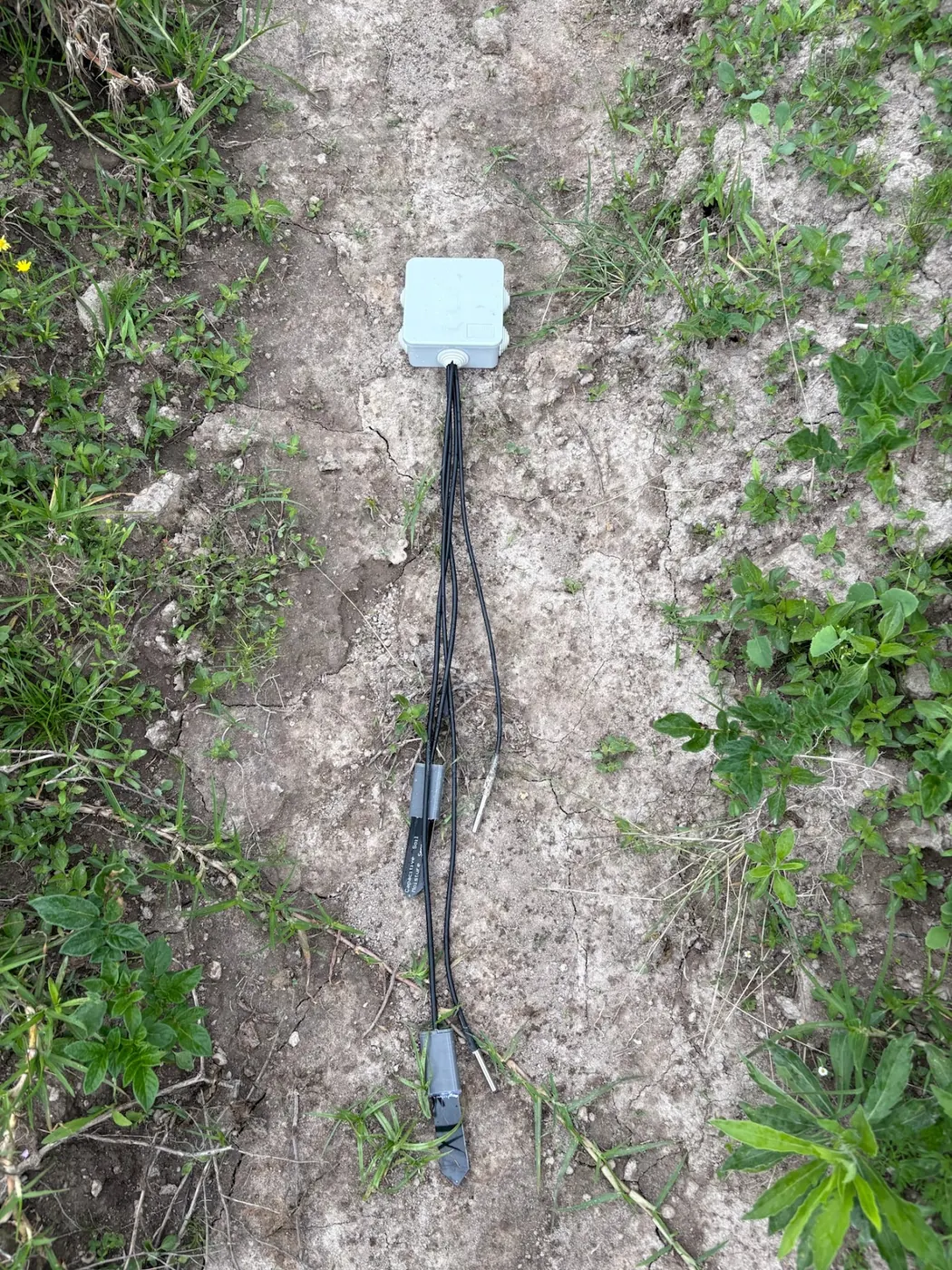
NuaSense builds the hardware behind these readings: LoRaWAN soil probes at two depths, a weather station, and the dashboard that ties them together. See what NuaSense offers.