Start with the number that gets ignored: agriculture already takes roughly 70 percent of the water people use worldwide, and the pressure on that share is only going one direction as global food demand is projected to rise 100 to 110 percent by 2050, according to the next-generation greenhouse water-saving strategies review. A soil-based greenhouse bed sits at the sharp end of that pressure, and the drain line at the low corner of the bed is the one place the whole path of the water becomes visible again, if you know what to look for.
Measured by NuaSense weather stations and soil probes on Kenyan farms, over the period stated with each figure. Past readings, not a forecast.
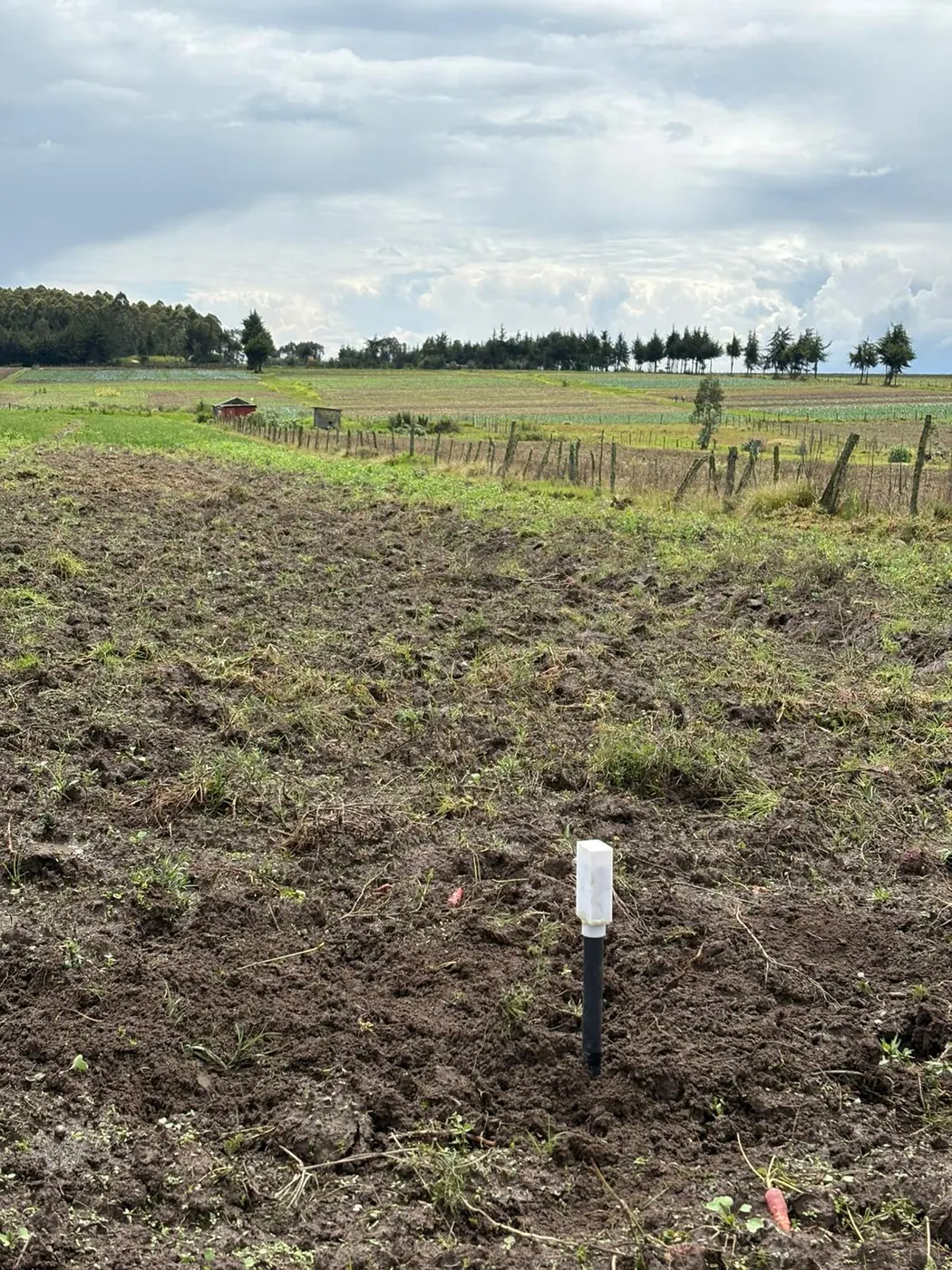
Water goes in, and most of it never reaches the drain
Irrigation water applied to a soil bed splits three ways almost immediately: some is taken up by roots and eventually transpired through the leaves, some sits in the pore spaces of the soil as stored moisture, and some keeps moving downward past the root zone. The same greenhouse review notes that transpiration accounts for 98 to 99 percent of the water a crop actually absorbs, which sounds like the whole story until you notice the word absorbs. That figure describes water the plant took up, not water applied at the dripper. A large share of what you irrigate with never gets absorbed at all, and the review is explicit that in modern greenhouse cultivation a significant portion of irrigation water is lost through deep soil seepage and ground evaporation, not through the crop.
This is why a drain reading matters more than a total-applied number. If you only track litres in, you are tracking a mix of three completely different fates as if they were one. The drain is the only point downstream of the root zone where seepage losses separate themselves out from the water the crop actually used, because by the time water reaches the drain, transpiration has already had its chance and lost.
The pore space decides how much can even sit in the bed
Before you can read a drain, you need to know what the bed underneath it can hold. Soil is not a solid block with water poured on top, it is roughly half solid material and half pore space, and the NC State Extension soils publication puts the ideal ratio at around 50 percent pore space, 45 percent mineral matter and 5 percent organic matter, with that pore space split evenly between air and water in a well-managed soil. That 50-50 air-water split inside the pore space is the working target, and it rarely happens on its own.
Tilling opens pore space up. Compaction and poor drainage close it down. A greenhouse bed that has been walked on for two seasons, or one built on a heavier subsoil layer that got mixed in during construction, holds a different volume of water at the same irrigation rate than a freshly turned bed does. That is a mechanical fact before it is a moisture fact, and it means the same volume applied to two beds on the same farm can produce two very different drain volumes for reasons that have nothing to do with the crop or the irrigation schedule. Anyone reading a drain line without having thought about the pore space underneath it is reading half a signal.
Field capacity: the point drainage stops on its own
After an irrigation event, water moves down through the pore space under gravity until the soil reaches what agronomists call field capacity, the point at which the remaining pores are holding water against gravity rather than letting it fall further. Past that point, gravity keeps pulling, and any water still moving down is water the bed was never going to keep. A drain that keeps running long after irrigation stopped is telling you the bed reached field capacity a while ago and everything since has been surplus.
This is the practical use of a drain reading that a total-applied number cannot give you: timing. If the drain starts running within minutes of the irrigation event and keeps going for an hour, you have applied well past what the pore space could hold, and every one of those extra minutes was pushing water, and whatever is dissolved in it, straight past the root zone. If the drain never runs at all, the bed likely never reached field capacity in the first place, which is a different problem with a different fix.
What deep seepage steals from the drain reading
Deep seepage is the loss route the greenhouse review names directly, and it does not always show up at the drain the way you would expect. In a bed with a compacted or clay-heavy layer partway down, water can perch above that layer and move sideways rather than straight down to the collection point, meaning some of what left the root zone never reaches the drain outlet at all. It has still left the crop's reach. It just did not report itself.
This is one of the honest limits of drain monitoring: a low or absent drain reading is not proof that nothing was lost, only proof that nothing was lost through the route you happened to be measuring. A bed with uneven subsoil, which the same publication traces back to parent material differences (weathered bedrock in some regions, floodplain sediment in others, marine or organic deposits elsewhere) will not drain uniformly across its length, and a single collection point at one corner of a long bed is sampling one path among several. If you have never mapped where the heavier layers sit under a given bed, the drain reading you are trusting may be reporting on the fastest route out, not the average one.
Transpiration takes almost everything transpiration gets a chance to take
The 98 to 99 percent transpiration figure from the greenhouse strategies review deserves a second look, because it is easy to misread as good news. It means that of the water a crop actually draws up through its roots, almost all of it exits through the leaves as vapour rather than staying in the plant tissue. It does not mean 98 to 99 percent of applied irrigation water goes to transpiration. Those are two different denominators, and conflating them is the single most common misreading of this figure.
What it does tell a grower is that once water is inside the root zone and available, the crop will pull hard on it, particularly under high demand conditions. Reference evapotranspiration computed from our own network's weather stations, drawn from hourly FAO-56 calculations, averaged 1.4 mm per day across six stations over the four weeks to mid-September 2026, with vapour pressure deficit peaking at 3.32 kPa across the same stations. Days with a VPD spike like that are days the crop is pulling hardest, and a drain reading taken on one of those days will read lower for reasons that have nothing to do with a leak or a blocked outlet: the crop simply took more of what you gave it before any surplus had the chance to move down.
Salt does not leave when water does
Water evaporates and transpires as pure vapour. Whatever was dissolved in the irrigation water, and whatever the crop's roots excluded rather than absorbed, stays behind in the soil solution. Every irrigation cycle that ends without drainage concentrates salts a little further, because the water that left carried none of them with it. This is why a bed that never drains is not automatically an efficient bed. It may just be a bed accumulating salt with nowhere for it to go.
None of the sources behind this piece give a nutrient or EC reading for greenhouse drain water specifically, and it would be wrong to invent one. What the mechanism does tell you, reliably, is the direction: a bed that is irrigated to field capacity and beyond, with a measured drain fraction leaving the root zone, is a bed that is actively flushing accumulated salts out through the same route the surplus water takes. A bed irrigated to just under field capacity, with no drain at all, is a bed with no flushing route open. Over one or two cycles the difference is invisible. Over a season it is the difference between a stable rooting environment and a slow salt build-up that eventually shows up as leaf scorch or stunted growth, at which point it is much harder to diagnose than a drain reading would have made it.
What a fast drain and a slow drain each tell you
A drain that arrives fast and stops fast usually means the bed reached field capacity quickly, the surplus moved through cleanly, and the pore structure is open enough to let gravity do its job without much resistance. That is close to the textbook picture the NC State soils publication describes for a well-aerated soil, and it is generally a sign of a bed you can trust to flush salts predictably each time you push it slightly past field capacity.
A drain that dribbles in slowly over hours, long after the irrigation event ended, tells a different story: water is moving through a restricted pore structure, possibly a compacted layer or a heavier clay fraction lower down, and taking its time doing it. That bed can still drain, but it drains on a schedule that does not match your irrigation schedule, which means a check made an hour after irrigating will systematically undercount what eventually leaves. And a bed that never produces a drain reading at all, no matter how much you apply, is either far from field capacity, holding everything you give it in a way that will eventually concentrate salts, or seeping sideways to a route your collection point does not reach. Three very different beds, three very different management responses, and the drain volume alone will not tell you which one you are standing on.
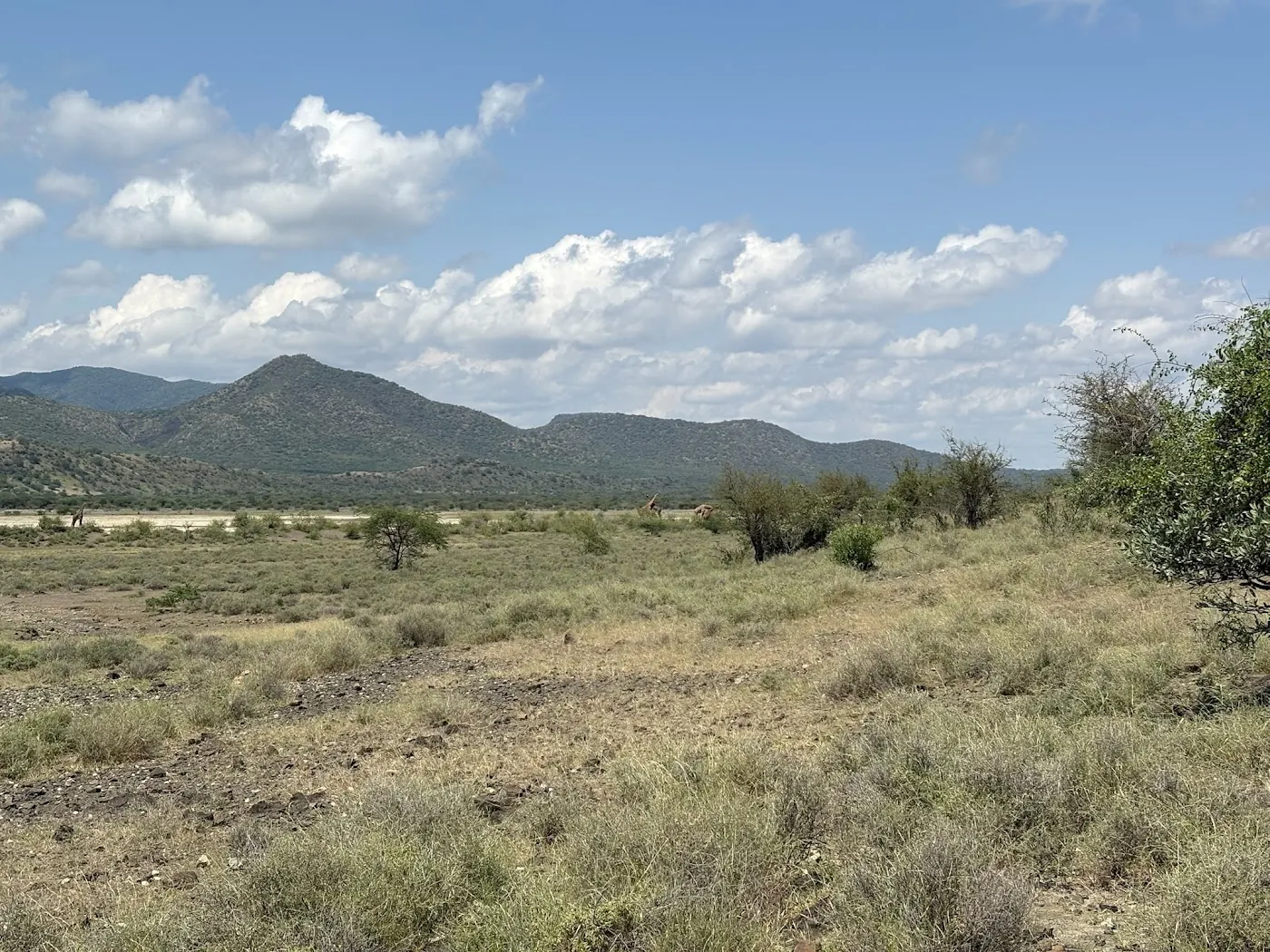
Soil colour and texture: reading the bed itself, carefully
Before trusting any drain reading, it helps to know roughly what kind of soil sits under the bed, and colour gives real, if partial, clues. The NC State Extension publication describes shades of red in clay soils as a sign of good aeration, and grey as a sign of poor drainage, with darker topsoil colours often tied to either high organic matter or poor drainage, and pale, grainy topsoil tied to low organic matter and heavy leaching. Texture matters just as much: clay particles, at under 0.002 mm, have a platelike structure suited to holding water and nutrients, while sand particles, running from 0.05 to 2.0 mm, are large and chunky and let water move through with little resistance.
The same publication is careful to say colour alone is not an indicator of soil quality, only a clue worth combining with other evidence, and that caution applies directly here. A grey, slow-draining bed and a red, fast-draining one will produce genuinely different drain behaviour for reasons rooted in the parent material the bed was built on, not in anything you did with the irrigation valve this week. Reading a drain line without ever having looked at what the soil in the bed actually is, is reading half the instrument.
Where our own soil probes fit in the same picture
A drain reading tells you what left the bed. A soil moisture probe tells you what the bed was holding just before that happened, which is the missing half of the same picture. Our deployed soil moisture sensors report relative moisture as a percentage of the sensor's own scale, not a calibrated volumetric water content, and across three of our probes over the four weeks to mid-September 2026 the average reading sat at 70 percent of scale, with most readings falling between 19 and 89 percent. That is a wide spread, and it is the point: a bed sitting near the top of that range before irrigation is a bed with little spare pore space left to absorb more, and a drain event on that bed will likely start almost as soon as water is applied.
A previous piece on this site worked out the three numbers a soil moisture reading actually needs to be read against, and that framework applies directly here: a moisture percentage on its own says nothing until you know where it sits relative to field capacity for that particular bed. Pairing a moisture trend with a drain observation turns two partial readings into one usable one, because the probe tells you what the bed held going in and the drain tells you what it gave up coming out.
What the shallow and deep probe disagree about, and why
Our probes read at two depths, a shallow one and a deeper one, and they do not move together. Soil temperature at our probe depths averaged 17.2°C across three probes over the same four-week period, but the two depths behaved differently: the steadier depth moved through 2.4°C over the period while the more variable one moved through 3.1°C, a span roughly 1.3 times wider. Moisture behaves the same way in principle, even though we pool both depths in our network average: the shallow probe responds fast to an irrigation event and dries fast afterward, while the deeper probe lags behind on both ends.
For drain interpretation, this matters because the drain outlet sits below both probes, at the bottom of the root zone. A shallow probe that shows a moisture spike and a fast decline, paired with a drain event that starts and stops quickly, describes a bed where water is moving through cleanly at both depths. A shallow probe spiking while the deeper probe barely moves, with a drain reading that lags well behind the irrigation event, describes a bed where the wetting front is taking time to reach the bottom, which changes how soon after irrigating a drain check is worth making at all. We do not publish a depth in centimetres for either probe, since burial depth is chosen per installation by crop and rooting pattern, but the relative lag between the two depths is a reading you can watch on your own farm regardless of exactly where the probes sit.
Rain, evapotranspiration and the drain: putting three numbers side by side
None of this happens in isolation from the weather. Rainfall recorded across our own network's weather stations, over the same four weeks to mid-September 2026, ranged from 0.0 mm to 73.1 mm between stations, a spread measured between separate stations rather than a single regional figure, and only 1.6 percent of all ten-minute readings across the network recorded any rain at all. Against a long-term CHIRPS satellite rainfall record of 43 years at the grid cells our stations sit in, September has averaged 35 mm, with a driest year of 5 mm in 1997 and a wettest of 79 mm in 2020. A greenhouse roof removes rain from the equation for the crop itself, but it does not remove evaporative demand, and the same period's mean vapour pressure deficit of 0.83 kPa, and ET0 of 1.4 mm per day, describes the pull on soil moisture that continues whether or not it rained outside.
The Overview of Water and Soil Nutrient Management covering East African smallholder systems notes that within-field runoff harvesting is among the most common water management practices in the region, a reminder that outdoor water scarcity concerns sit right next to the greenhouse wall even when the crop inside is fully sheltered from rain. A grower deciding how hard to push irrigation toward the point of producing a drain reading is making that decision inside a wider regional water picture, not an isolated one, and a related piece on increasing crop yields in Kenya covers the water strategies that connect the two.
Failure modes: what a wrong reading of drain water leads you to do
The first failure mode is treating drain volume as a single efficiency score. A bed that never drains is not automatically the efficient one, it may be the one quietly building up salt with no flush route open, for exactly the reason described earlier: dissolved salts do not leave with evaporated or transpired water, only with drainage. Chasing a target of zero drain, on the assumption that any water reaching the outlet is wasted, is the fastest way to build a salt problem you will not see until it shows up in the leaves.
The second failure mode is checking the drain too soon or too late relative to the lag between the shallow and deep probe readings, and concluding the bed does not drain when it simply has not finished moving water through yet. The third is trusting a single collection point on a long bed as if it represented the whole bed, when uneven parent material underneath can send water sideways to a route the drain never sees, understating true seepage loss. The fourth, and the one worth naming plainly, is treating a drain reading as proof of anything about crop water use efficiency without having separately measured infiltration into that bed in the first place. A previous piece on this site set out why an irrigation run time is wrong without a measured soil infiltration rate, and that measurement, not the drain volume, is the one that tells you how much water the bed can even accept per irrigation cycle before you start interpreting what comes back out.
None of these four failure modes are fixed by watching the drain harder. They are fixed by knowing the bed the drain sits under: its pore space, its texture, its parent material, and how its two probe depths lag each other through a wetting and drying cycle. The drain is the last word in that sequence, not the whole conversation, and a grower who treats it as the whole conversation is going to misread it eventually.